Birth within the clan

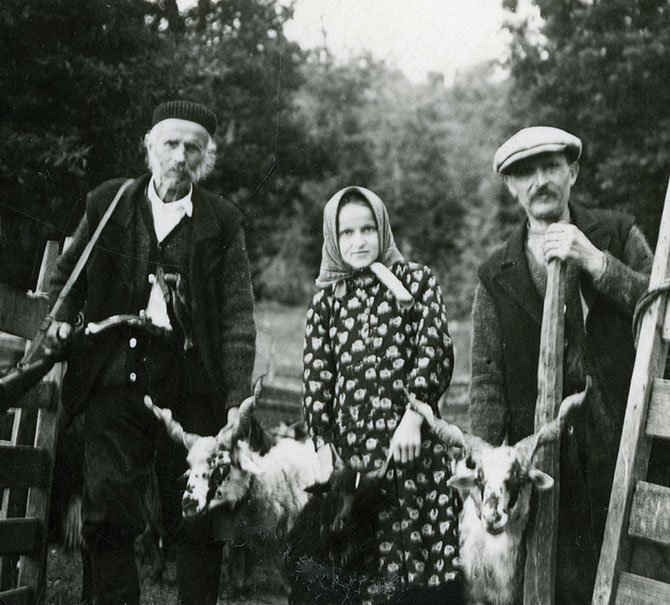
In the pastoral world of Velebit, the core social unit was the clan — an extended family that collectively managed the herd, shared pastures and supported one another in labour and hardship. You were born into a clan, and you lived alongside your clan. It determined who you were, where you belonged and what was expected of you.

Growing up with the herd

The children of the Podgorje people spent every summer on the mountain — among the pastures, rocks and crags. They were integrated into daily chores at an early age: accompanying elders to the grazing grounds, tending smaller groups of sheep, bringing water or helping with milking.

As they grew, their responsibilities shifted and became more challenging. The youth gradually took on more tasks — around the herd, around the hut, around everything that mountain life required.

Between work and play

Play folded into work. Vinšćak recorded shepherd games characteristic of the Velebit region.

Krivanje or švinkanje was played with a wooden ball and sticks around holes dug into the earth. Gredanje was used to practice target throwing: stones were lined up in a row and the winner was whoever scored the most hits. Bućanje and klisanje were throwing games — hurling flat stones or small wooden sticks as far as possible from a marked line.

Play and work were intertwined — both developed resourcefulness, a connection with nature and a sense of responsibility.

Old age and memory

The elders were the living memory of the community. They knew where the hidden water springs lay, which path to take when clouds rolled in from the sea, which herbs could heal an injured sheep. This knowledge was not written anywhere — it lived within the people.

It was passed down through work: children would accompany their elders, listening, watching and remembering. When an old man said "not this way," no explanation was needed. Experience spoke for him.

Death and the mirilo

The life of a shepherd began and ended alongside the same stone, the same path, the same clan. In this worldview, death was not an end — merely a transition. They marked this transition with stone along the path: mirilo.